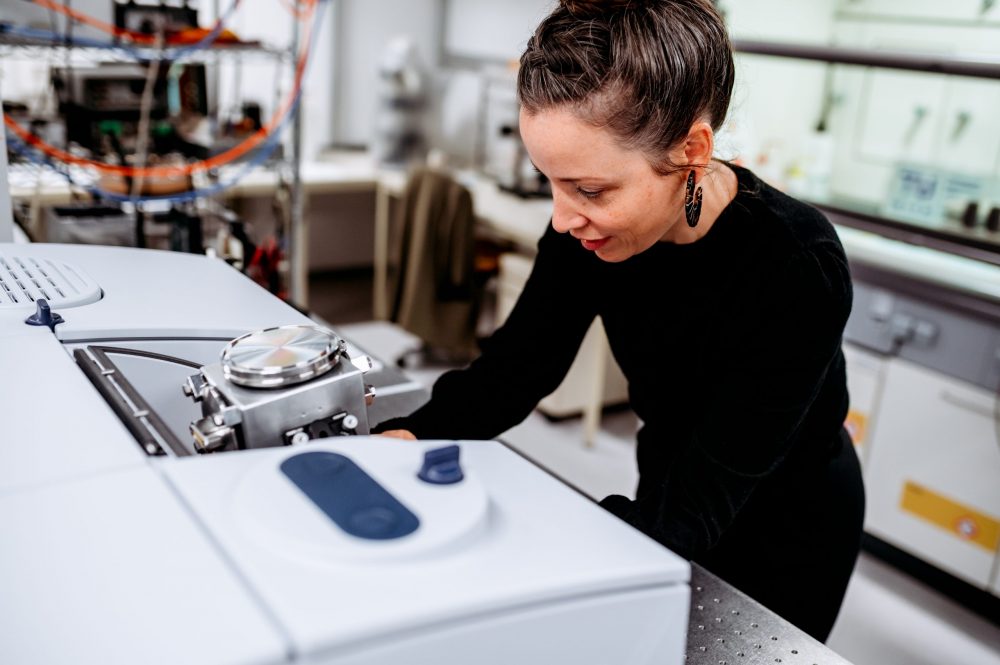
Micro- and Nanoplastics
EMILIE offers for the first time a tool suitable for the routine monitoring of nanoplastics.
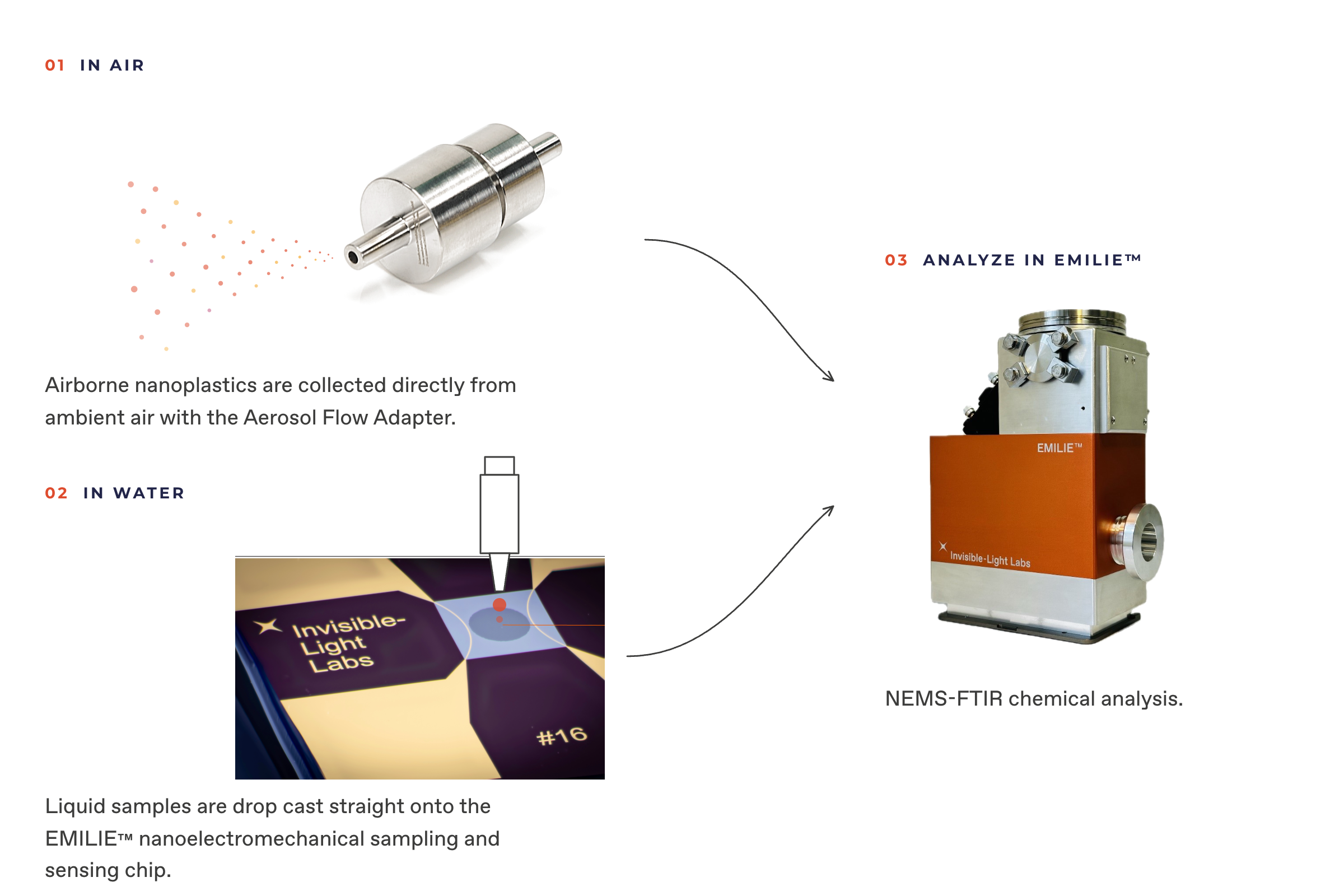
Collection of nanoplastics in air and acqueous samples
Airborne nanoplastics can be collected directly from ambiant air using the aerosol flow adapter while liquid samples can be dropcasted directly on the EMILIE nanomechanical sampling and sensing chip.
Read More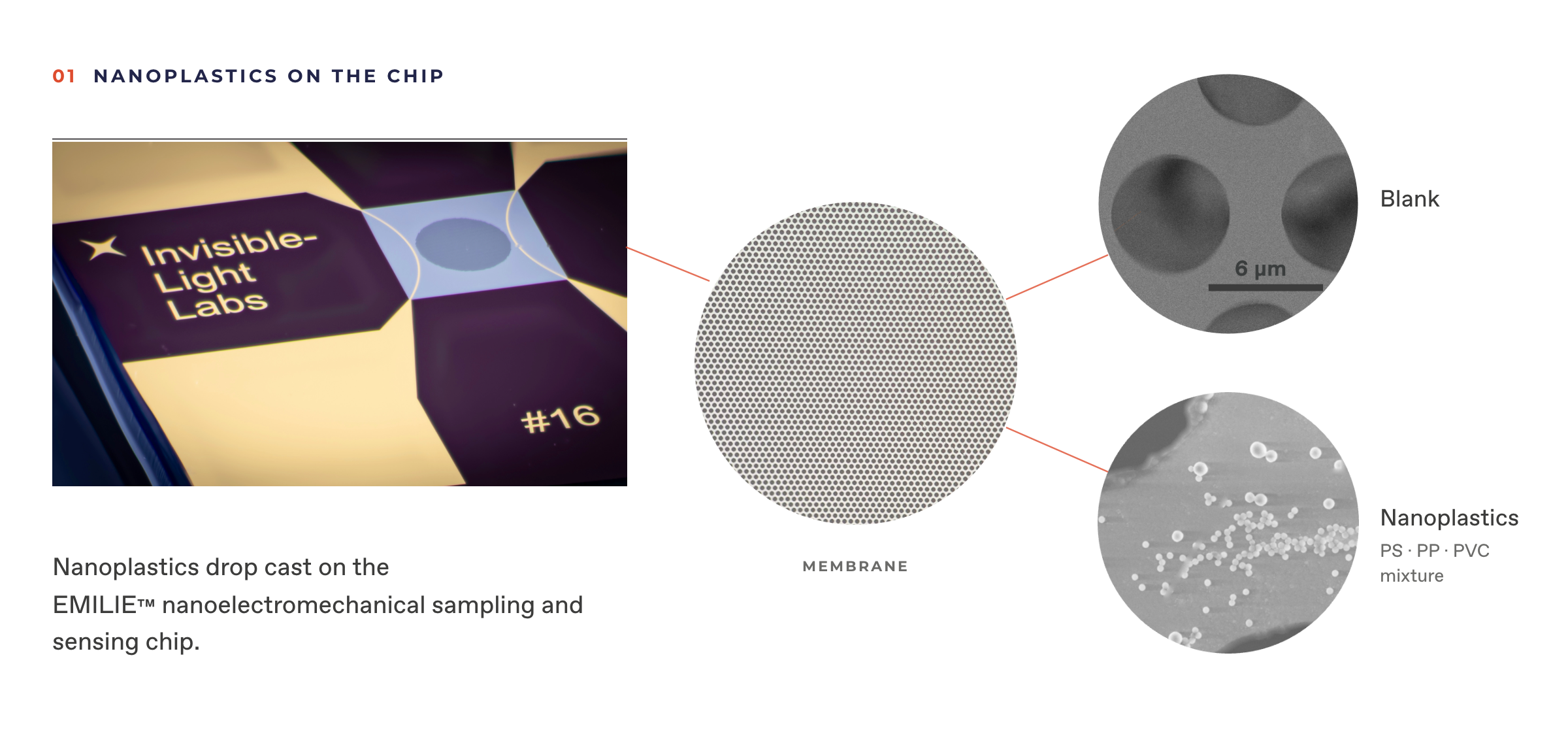
Nanoplastics particles are deposited directly on the EMILIE chip
There is no lower size limit for nanoplastics deposited via drop casting. Airborne nanoplastics with sizes ranging from 10 nm to 3200 nm can be collected directly via impaction on the EMILIE nanoelectromechanical sampling and sensing chip.
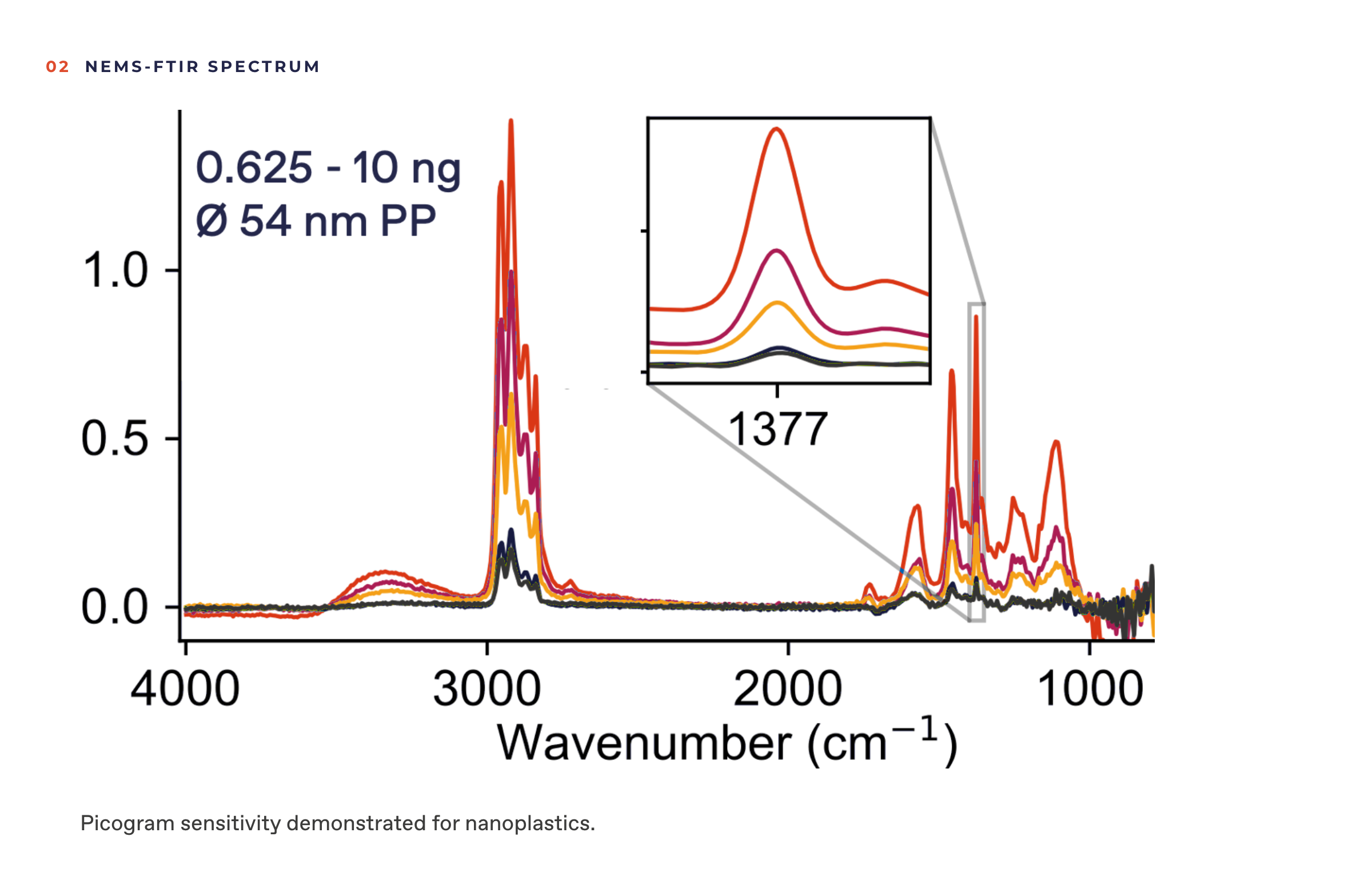
Chemical characterization of nanoplastics by NEMS-FTIR
AFter sample deposition, the EMILIE chip is transfered to the EMILIE infrared analyzer. The resulting NEMS-FTIR spectrum is compatible with available infrared spectral libraries for identification.
EMILIE compared to the state of the art in nanoplastics characterization
1000x
More sensitive than PTFE filter-based transmission spectroscopy
100x
Shorter sampling times compared to filter-based techniques
4x
Complementary orthogonal techniques for further analysis: RAMAN spectroscopy, SEM/EDX, O-PTIR, and LDIR
1x
Order of magnitude more sensitive than state-of-the-art pyrolysis – gas chromatography Mass Spectrometry (PY-GC-MS)
EMILIE
The first nanoelectromechanical analyzer for nanoplastics
Characterize nanoplastics and oligomers with picogram sensitivity and no size limitation!